
Key takeaways:
- The University of Minnesota’s Bell Museum of Natural History has installed a powerful new CT scanner to X-ray about 3 million specimens.
- The scans will reveal details of plant and animal anatomy and evolutionary processes useful to biodiversity researchers across Minnesota and beyond.
Specimens in the University of Minnesota’s Bell Museum of Natural History are about to get a new look.
Scientists from the University and around Minnesota will use a sophisticated new CT scanner to gain unprecedented views of the internal anatomy of about 60% — some 3 million — of the Bell’s specimens, which include plants as well as insects, fish, birds, reptiles, amphibians and mammals.
Formally named the Nikon VOXLS 20 C-225 micro-CT scanner, the instrument directs high-powered X-rays into specimens as they slowly spin, yielding detailed images and 3D printouts. These are clearer and more revealing than clinical scans because nonliving material can be subjected to more powerful X-rays.Dr.

Leading the effort is Kassandra Ford, curator of ichthyology (the study of fishes) and malacology (the study of mollusks) at the Bell Museum.
Her research group hopes the scanner will reveal differences and similarities in the heads of fish collected over many decades. That could reveal, for example, whether those head structures are becoming more similar over time in response to living in similar aquatic environments, a phenomenon classed as “convergent evolution.”

Also, “Others look at, for example, the invasive common carp for aspects of its form or structure we can use against the species,” she notes. “There’s a complex of bones in the back of their skulls, by the ears, that helps with high-pitched hearing."High-pitched noises hold potential for repelling northward-spreading carp at locks and dams on the Mississippi River.
“We want to get samples of different organisms from every Bell Museum collection in 3D,” adds Ford, who is also a professor in the Department of Fisheries, Wildlife and Conservation Biology in the College of Food, Agricultural and Natural Resource Sciences, which houses the Bell Museum.
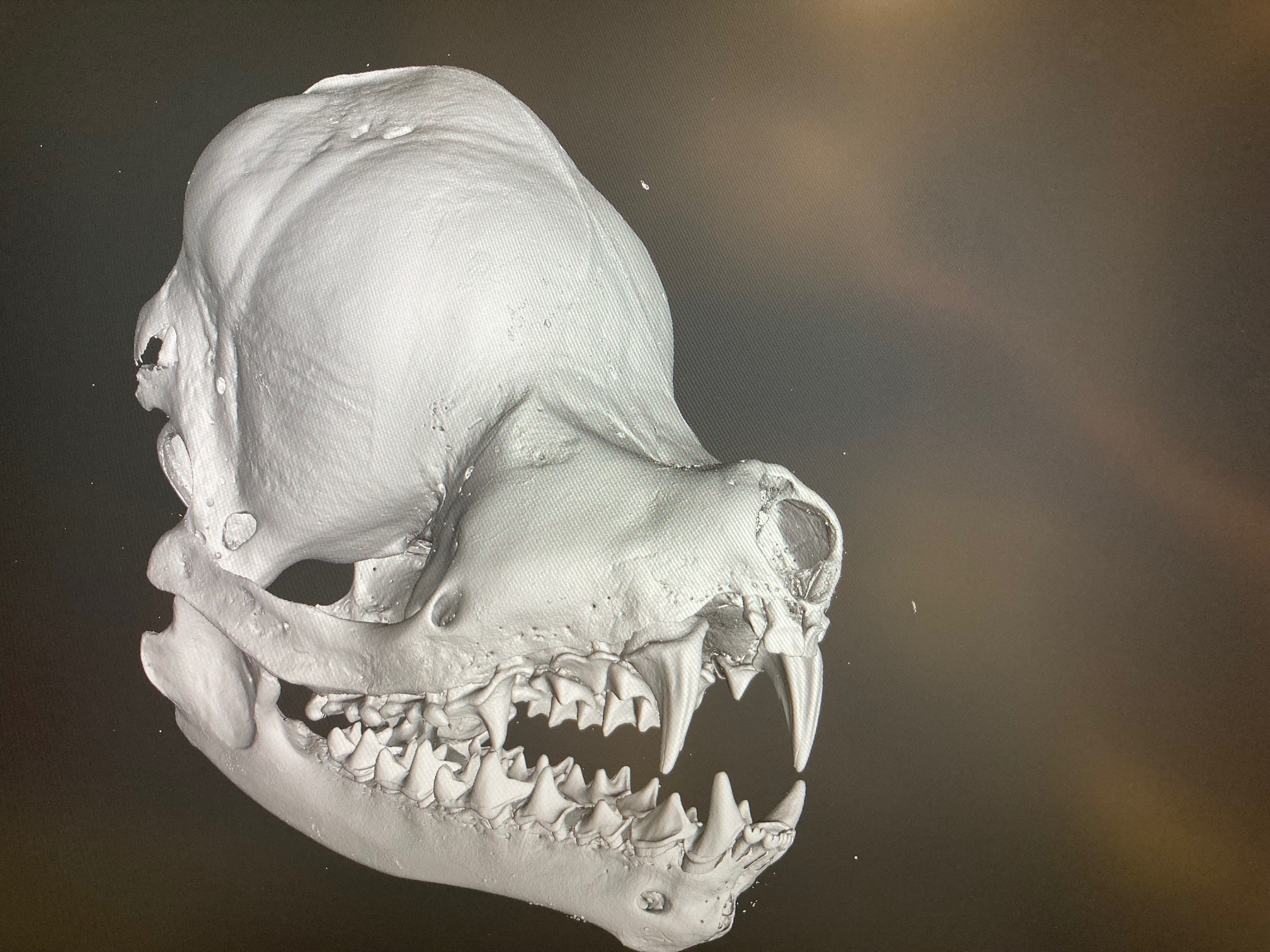
With a scanner of this power and versatility, the Bell Museum joins the ranks of Chicago’s Field Museum and the Smithsonian National Museum of Natural History.
“Investments like this are how the Bell Museum continues to demonstrate that we are a dynamic and innovative institution,” says museum executive director Holly Menninger. “Our curators and researchers are pushing the envelope on collections-based research in new and exciting ways.
“Beyond scanning the Bell's scientific collections and advancing the research of Bell curators and graduate students, we intend for the CT scanner to be an accessible facility used by biodiversity researchers across Minnesota and beyond,” she says.
Even though only about 3 million of the Bell’s 5 million specimens are scannable, “It’ll take the rest of the machine’s life to scan those 3 million,” Ford says. “We hope it will last 15 to 20 years — if I can keep it well oiled.”
- Categories:
- Science and Technology


